The World's Oldest Land Animal, a 194-Year-Old Tortoise, Offers Clues About Aging
Jonathan's DNA and epigenome, studied from a cheek swab, show unusually stable repair and metabolism switches. Researchers stress it is early work.
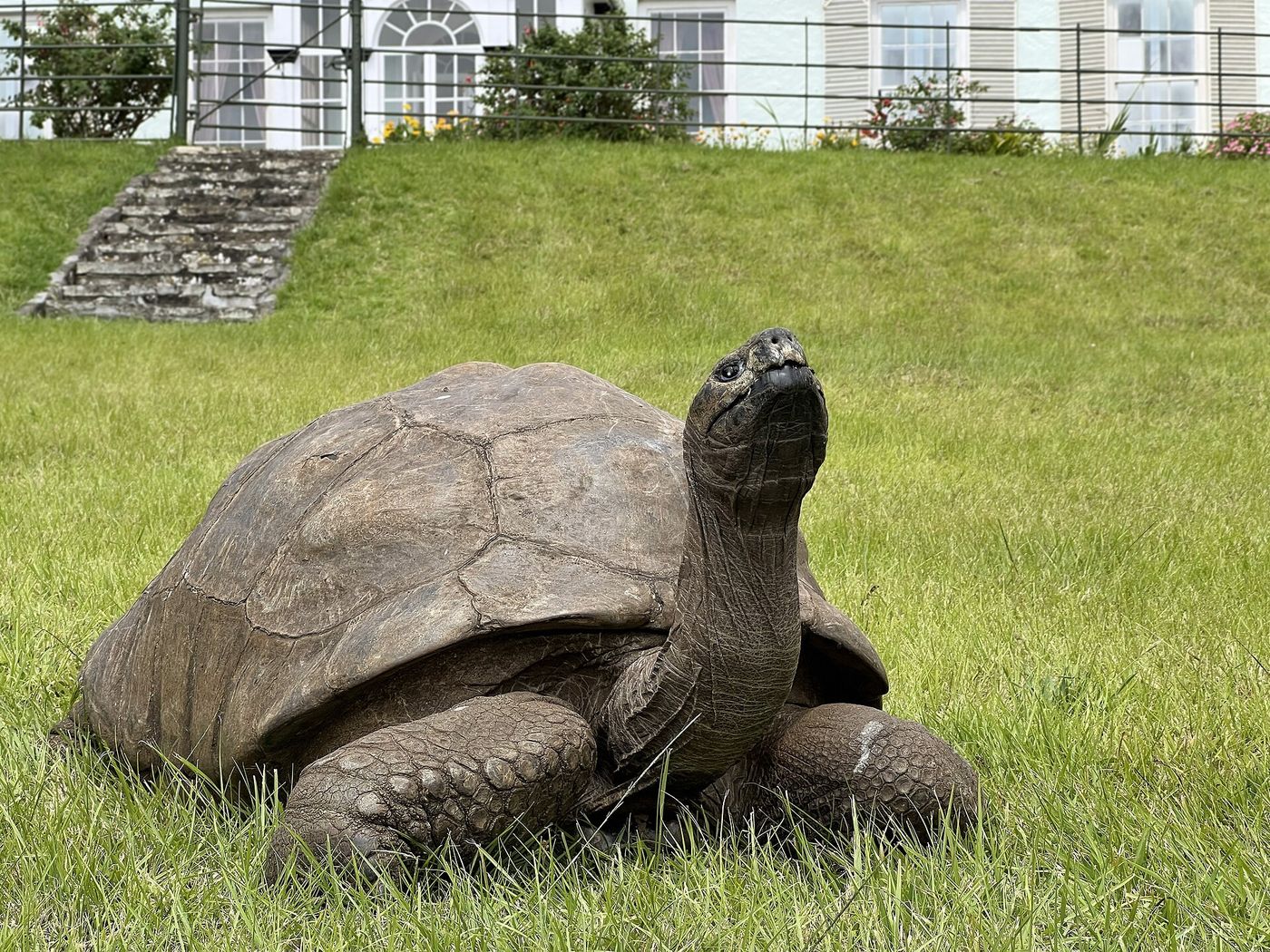
Photo: Kevin Gepford / CC BY-SA 4.0 via Wikimedia Commons
Jonathan, an Aldabra giant tortoise believed to be about 194 years old and widely described as the world's oldest living land animal, has become the subject of a new genetic study. Researchers led by the longevity nonprofit Kallel published the work in the journal *Science Advances*, under the title "Epigenetic insights into extreme longevity in the world's oldest terrestrial animal, Jonathan."
What the team did
Because Jonathan is a protected animal, the scientists sequenced his genome from a simple cheek swab rather than a blood sample. They then compared his epigenome, the chemical switches that control which genes are active, with those of younger Aldabra tortoises.
What they found
- Gene variants: 287 unique variants that may soften the usual effects of aging.
- Pathways: changes linked to DNA repair, mitochondrial function, insulin regulation and telomere function.
- Stable switches: the controls for DNA repair and metabolism genes looked very similar to those of younger tortoises, which is unusual, since epigenomes normally shift with age.
The regulators "remained incredibly stable in Jonathan over almost two centuries." — Dr. Justin Gerlach, University of Cambridge
Keep it in perspective
This is a study of a single animal, so it cannot show cause and effect, and Jonathan's age is an estimate. The senior author, Dr. Stephen Clark, has said the field is at the very beginning of understanding aging. Nothing here is a treatment for people. Still, giant tortoises are a rarely studied corner of longevity biology, and Jonathan's data give researchers a new reference point.