Scientists Confirm 57 New Species From a Deep Argentine Submarine Canyon
A livestreamed 2025 expedition has produced new corals, sea cucumbers and copepods, plus five new genera.
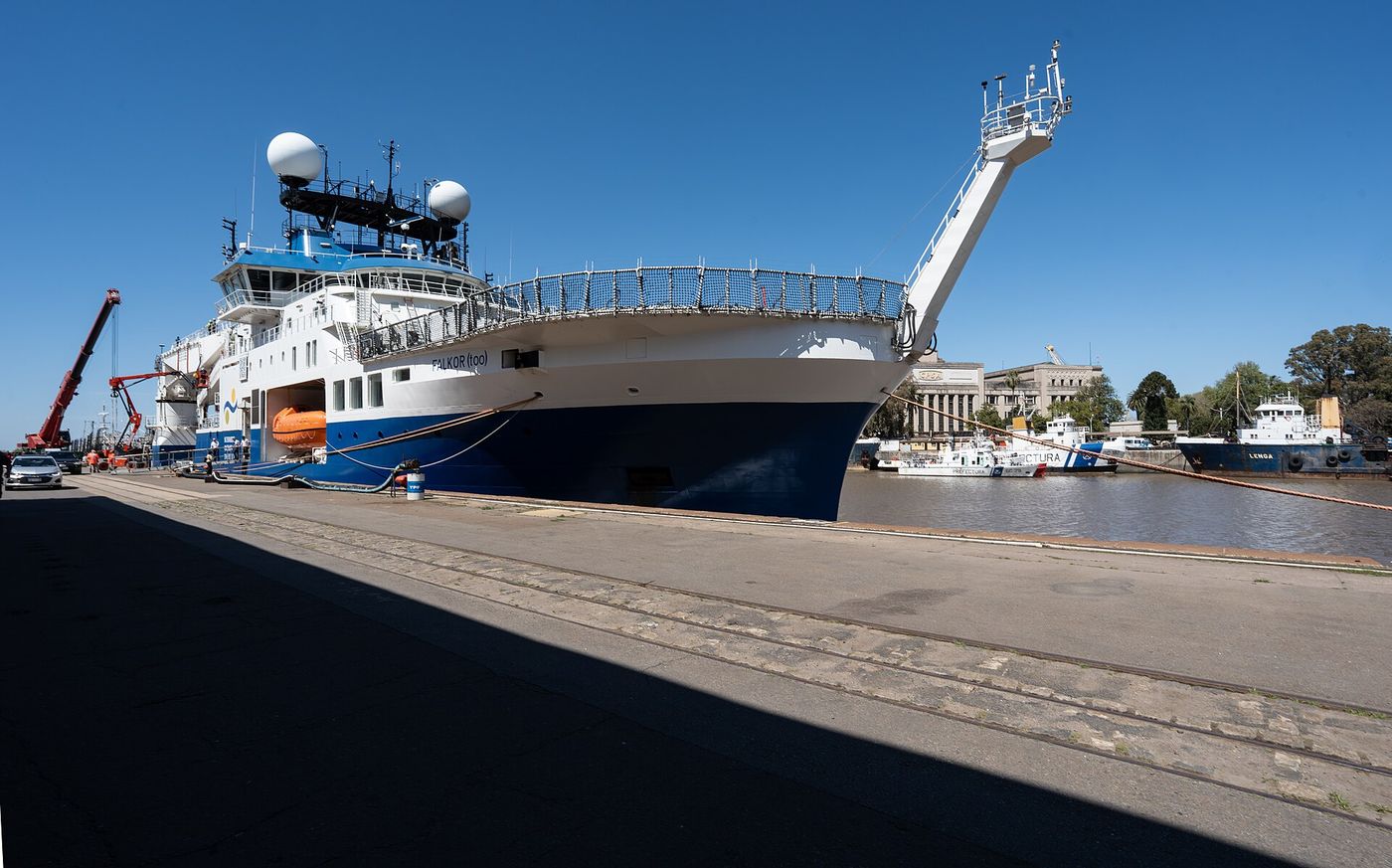
Photo: Embajada de EEUU en Argentina / CC BY 4.0 via Wikimedia Commons
The deep sea off Argentina has handed scientists a haul of discoveries. On October 1, the Schmidt Ocean Institute announced that 57 new marine species, along with five new genera, have been identified from the Mar del Plata submarine canyon.
From livestream to discovery
In August 2025, the research vessel *Falkor (too)* and its underwater robot *SuBastian* explored the canyon, which drops below 3,500 metres. It was the first time a remotely operated vehicle had been used to observe it, and the dives were livestreamed to the public.
Specimens were then studied at a Species Discovery Workshop held 13 to 24 July 2026 at Universidad Maimónides in Buenos Aires. Twenty taxonomists and early-career researchers from Latin America and Europe took part, supported by Ocean Census.
What was found
- Copepods: 20 new species and one new genus, from only about 10% of the samples examined.
- Echinoderms: 22 new species, including the horned "Loki" sea cucumber, found at 2,577 metres.
- Cnidarians: 14 new species, including corals, with some possible new genera and a possible new family awaiting genetic analysis.
- Other: one new scaphopod (a tusk shell).
Schmidt Ocean Institute Executive Director Dr. Jyotika Virmani said the expedition captured public imagination when the team livestreamed Argentina's deep sea.
Why it matters
Most of the deep ocean is unexplored, and each described species adds to the baseline needed to protect it. Organizers credit open data and international teamwork for turning a two-week expedition into so many identifications. Another expedition to a different Argentine submarine canyon is planned for February and March 2027.