Aldabra's Giant Tortoises Number About 180,000, the Largest Population Estimate on Record
A five-year survey on a remote Seychelles atoll gives conservationists their most reliable baseline yet for one of the world's last wild giant-tortoise strongholds.
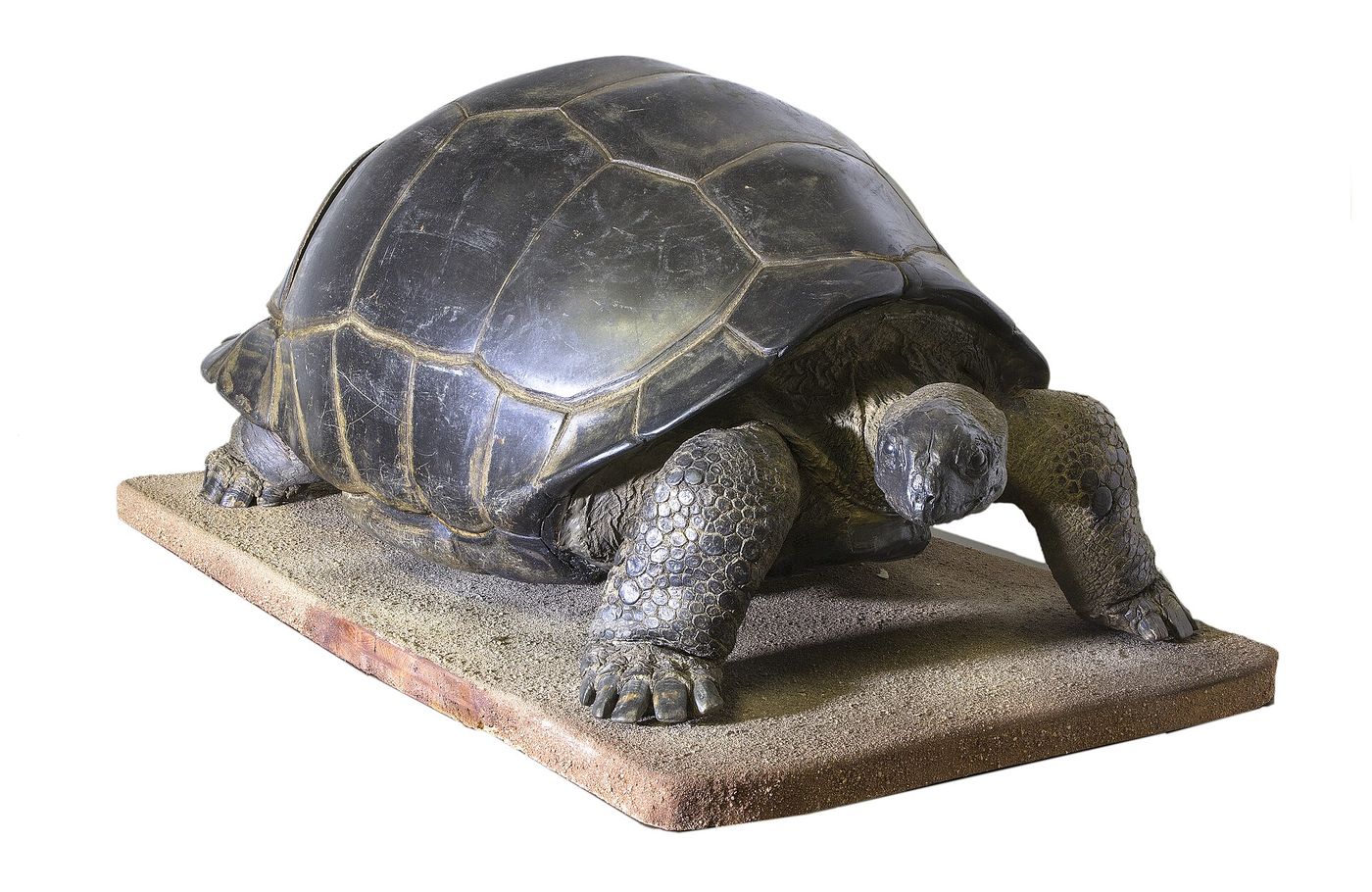
Photo: Roger Culos / CC BY-SA 4.0 via Wikimedia Commons
Aldabra Atoll in the Seychelles is home to roughly 180,000 giant tortoises, the highest population figure ever recorded for the species, according to a study announced on October 7 by the University of Exeter and the Seychelles Islands Foundation. The research appeared in the journal *Ecology and Evolution*.
"Proof of what long-term commitment to conservation can achieve." — Dr Frauke Fleischer-Dogley, Seychelles Islands Foundation
How they counted
Foundation staff gathered tortoise counts across the atoll from 2018 to 2022. Researchers then used a statistical approach called Bayesian hierarchical distance sampling, which corrects for animals that are present but hidden from view and for differences in visibility between habitats. Dense scrub and mangrove make spotting tortoises hardest, while open grassland, nicknamed "tortoise turf," holds the highest densities.
- Best estimate: almost 183,000 adult and sub-adult tortoises
- Earlier widely cited figure: about 100,000, from the late 1990s
- 19th-century low: fewer than 1,000, after heavy exploitation
The authors caution that older surveys probably undercounted, so the jump does not reflect growth alone. They describe the population as stable over the study period.
Why it matters
Aldabra is one of only two places where giant tortoises still live wild. Co-author Dr Nancy Bunbury called the result the most reliable baseline yet for this species, and a firm baseline is what managers need to spot change early.
Challenges ahead
The team points to several pressures:
- Longer, more frequent droughts that could cut shade and food
- Rising seas threatening low-lying parts of the atoll
- Feral cats and black rats that prey on eggs and hatchlings
Feral goats were eradicated in 2012, and the authors call for removing the remaining invasive mammals. As Dr Dave Hudson put it, the numbers are a baseline, not an endpoint.