Reef Study Finds Coral Often Survives Crown-of-Thorns Starfish Bites
University of Sydney researchers say living tissue remained after almost 75% of feeding events at One Tree Reef, though outbreaks remain a serious threat.
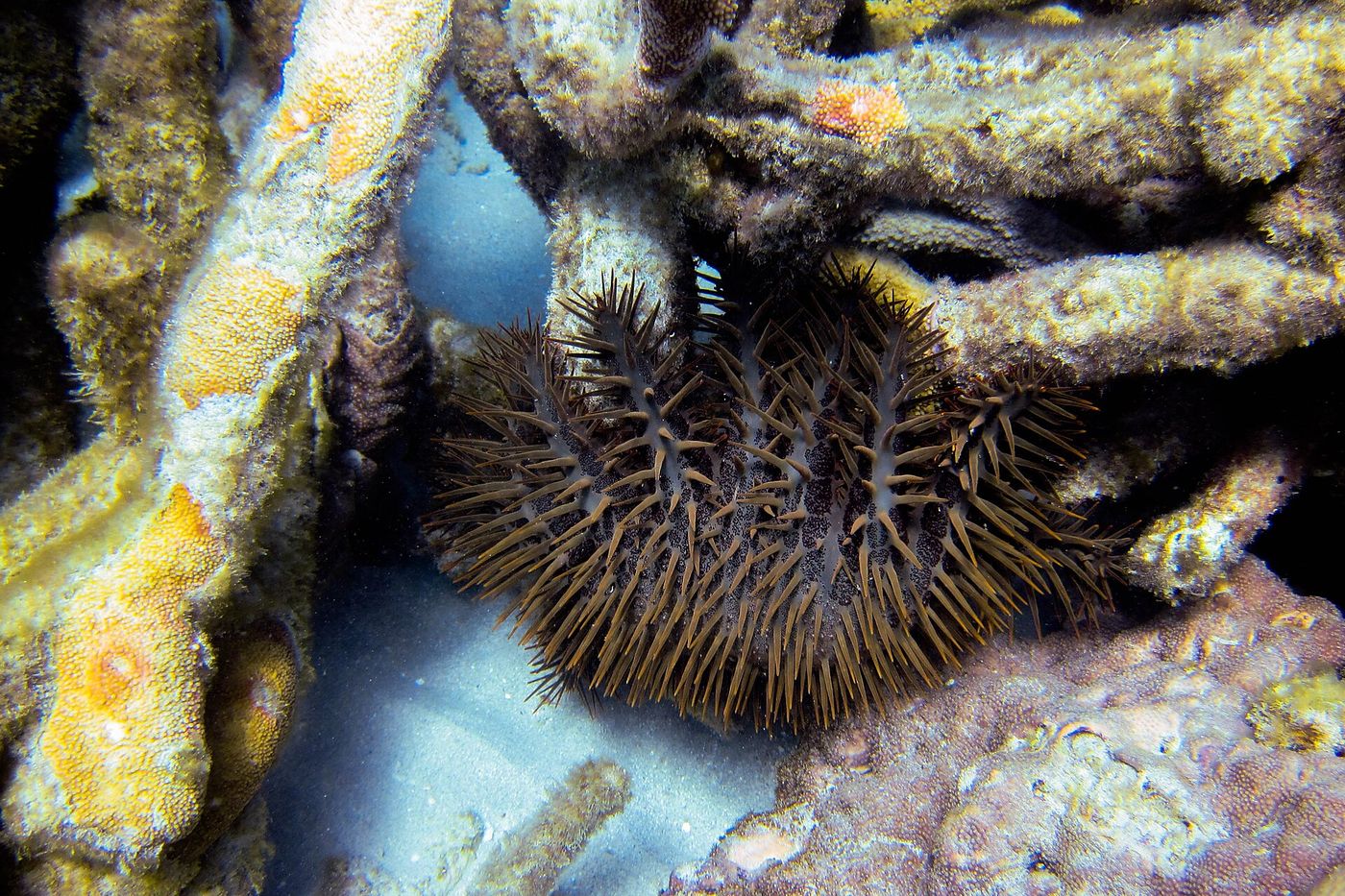
Photo: Ryan McMinds / CC BY 2.0 via Wikimedia Commons
The crown-of-thorns starfish is best known as a coral killer, but a new University of Sydney study suggests that, at low numbers, it may play a more balanced role on the Great Barrier Reef. The research was published in the journal *Ecology and Evolution* and picked up by ScienceDaily in early November 2026.
What the researchers saw
Working at the university's One Tree Island Research Station, the team tracked feeding scars left by individual starfish. Living coral tissue remained after almost 75% of the feeding events they examined.
- Starfish tended to eat a fairly consistent amount per meal, then move on.
- Fast-growing *Acropora* corals, a favorite food, did not regrow over the damaged areas.
- Slower-growing *Montipora* and *Porites* corals did regrow, which may help keep the reef's mix of species varied.
Lead author Dr Shawna Foo said low-density populations "create space for slower-growing coral species to persist." Co-author Professor Maria Byrne said the results fit the intermediate disturbance hypothesis, the idea that moderate disturbance can support diversity.
Why it matters
Reef managers spend heavily on culling starfish during outbreaks, which have struck the Great Barrier Reef several times since the 1960s. The findings hint that the goal after an outbreak need not be eliminating every starfish, as long as predator populations, such as tritons and certain reef fish, are protected.
Important caveats
- The work was done mainly in protected areas with healthy fish populations and few starfish. It may not apply where outbreaks are under way.
- The authors stress that large outbreaks can still cause extensive, long-lasting coral loss.
- Dr Foo said culling "needs to be complemented by strong marine management to protect COTS predators."
The study adds nuance to a familiar villain rather than a reason to relax: healthy predator populations appear to be key to keeping starfish in their natural role.