Seabirds and Native Forests Could Help Low-Lying Atolls Keep Pace With Rising Seas
A Science Advances study of 28 atoll islands found reefs grew up to 2.5 times faster around rat-free, seabird-rich islands.
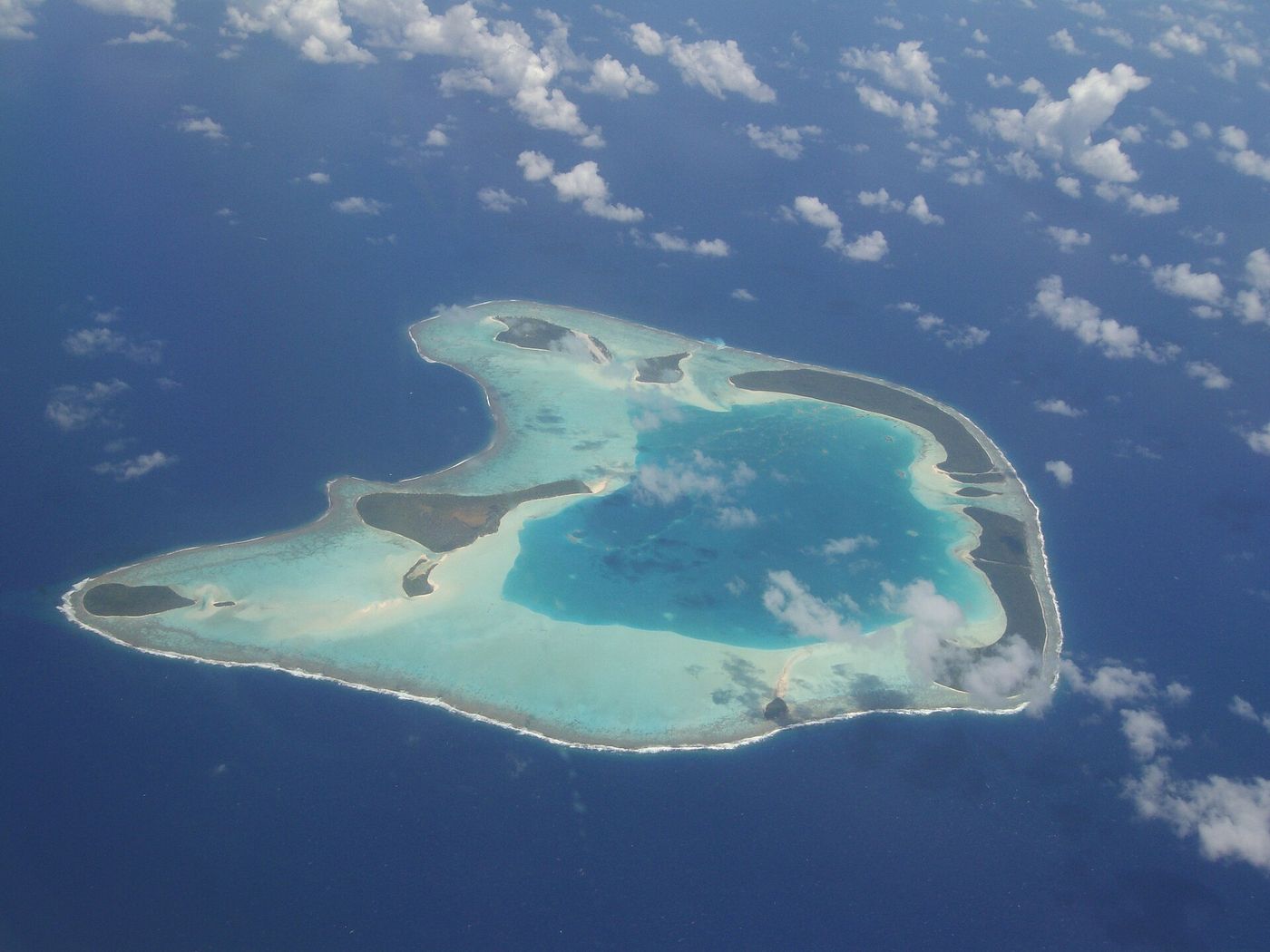
Photo: Supertoff / CC BY-SA 3.0 via Wikimedia Commons
Restoring seabirds and native trees on tropical atolls may help the islands build themselves up as seas rise, researchers led by Lancaster University reported on 14 October in *Science Advances*.
The team, led by Distinguished Professor Nick Graham, compared 28 atoll islands in the Seychelles, the Chagos Archipelago and French Polynesia's Tetiaroa Atoll. Some are rat-free with thriving seabird colonies; others are overrun with invasive rats.
What they found
Seabirds feed at sea and bring nutrients ashore in their droppings, some of which wash onto the surrounding reefs.
- Reef growth: 1.8 times greater on lagoon reefs and 2.5 times greater on ocean-facing reefs around seabird-rich islands
- Sediment: an estimated 2.3 to 2.8 times more produced, the raw material that builds up island shorelines
- Roots: fine root length was an estimated 4.6 times higher in areas of native vegetation than where it was sparse
- Scale: for a 14-hectare island, roughly 170 cubic metres more sediment a year
Chris Perry of the University of Exeter called it "a sizeable uplift in the sediment production potential of these systems."
Why it matters
Low-lying atolls are among the places most exposed to sea-level rise. The study suggests that removing invasive rats, bringing back seabirds and replacing abandoned coconut plantations with native forest could help some atolls keep pace with the sea-level rise projected under 2°C of warming. Coconut plantations are estimated to cover about 60% of Pacific atoll forests.
Jennifer Appoo of the University of the Seychelles said island restoration can enhance atoll resilience as well as benefit biodiversity.
Context
- The figures are estimated potentials drawn from combined datasets, not results of new experiments
- Comparisons are between islands with and without seabirds and rats, so not every difference can be tied to a single cause
- Cutting greenhouse gas emissions remains essential
The findings point to restoration as a practical complement to climate action for island communities.