London's Oxford Street Goes Car-Free, Giving Pedestrians Nearly a Kilometre of Europe's Busiest Shopping Street
Traffic is out and trees, seating and two new public squares are on the way, as the city bets on people on foot.
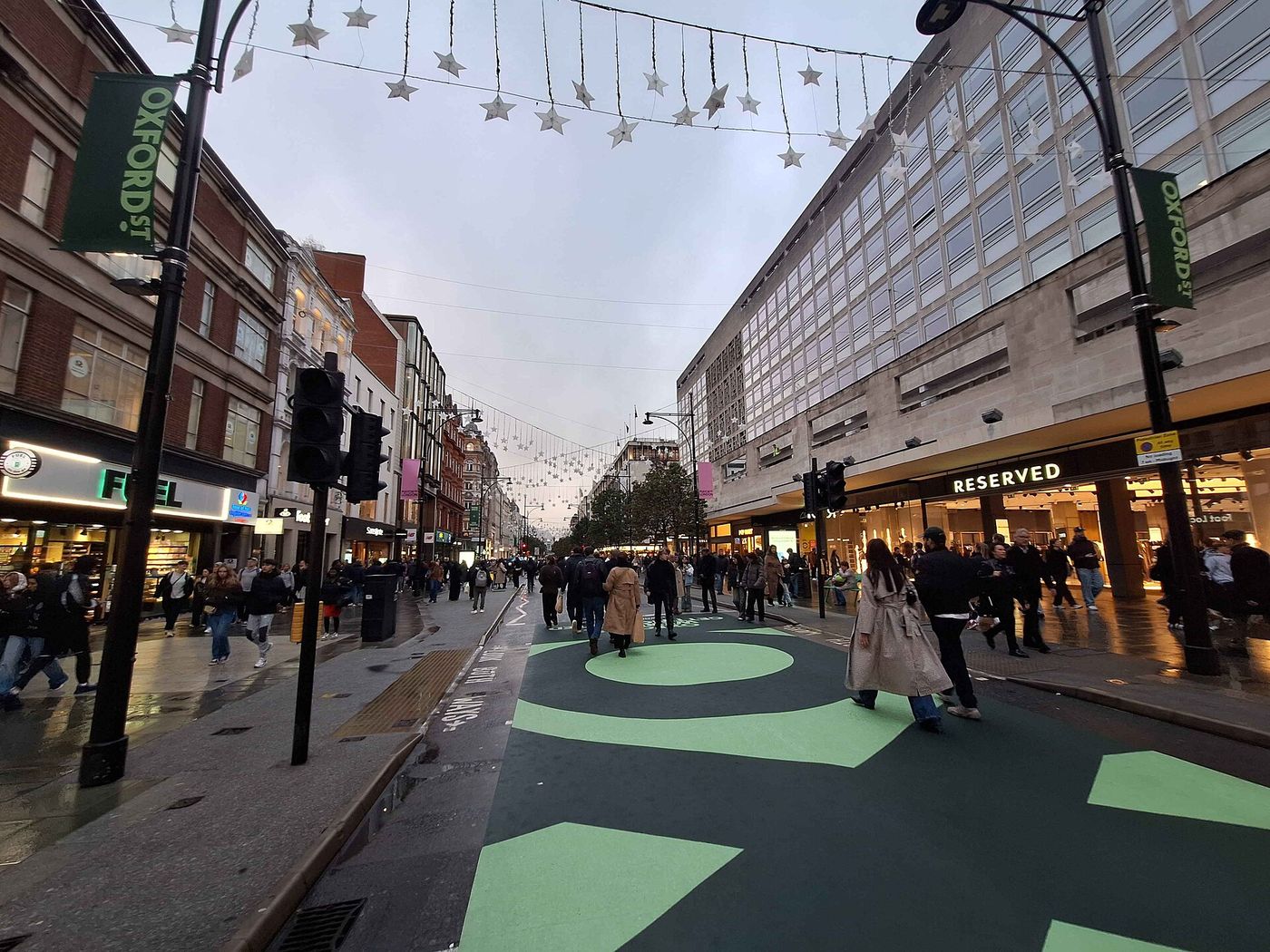
Photo: Tempaccountforediting / CC BY-SA 4.0 via Wikimedia Commons
London's Oxford Street, one of the world's best-known shopping streets, became traffic-free on 26 October 2026, according to an Associated Press report carried by Euronews. Nearly a kilometre of the street, between Orchard Street and Great Portland Street, is now reserved for people on foot.
What changes
- Cars, buses and bicycles are no longer allowed on the stretch, and vehicles are diverted onto surrounding roads.
- Tree planting, new seating and two new public squares are planned.
- Further work begins in the new year, with designs to be refined using feedback from visitors.
The street still draws around half a million visitors a day, and officials expect pedestrianisation to attract new shops and more people.
"A momentous day for Oxford Street." — Sadiq Khan, Mayor of London
Khan told the BBC he wants people to come and shop before Christmas. This year's festive lights will have a Harry Potter theme.
Why it matters
Giving a major commercial street back to pedestrians is a visible shift for a city that has long struggled with congestion and air quality on its busiest roads. Cleaner, calmer streets with trees and seating can also make a shopping district a more pleasant place to spend time.
Context
The plan was not without opposition. Local residents argued that diverting traffic would clog their neighbourhoods, and the report notes that this opposition was overcome before the scheme went ahead. How well the diversions work, and whether the street delivers the new shops and visitors that officials hope for, will only become clear in the months ahead.