A Year of NYC Congestion Pricing Cut Fine-Particle Pollution Inside the Zone by About 13%
A Columbia-led study found a modest but measurable air-quality gain, with traffic entering Manhattan's tolling zone down roughly 11%.
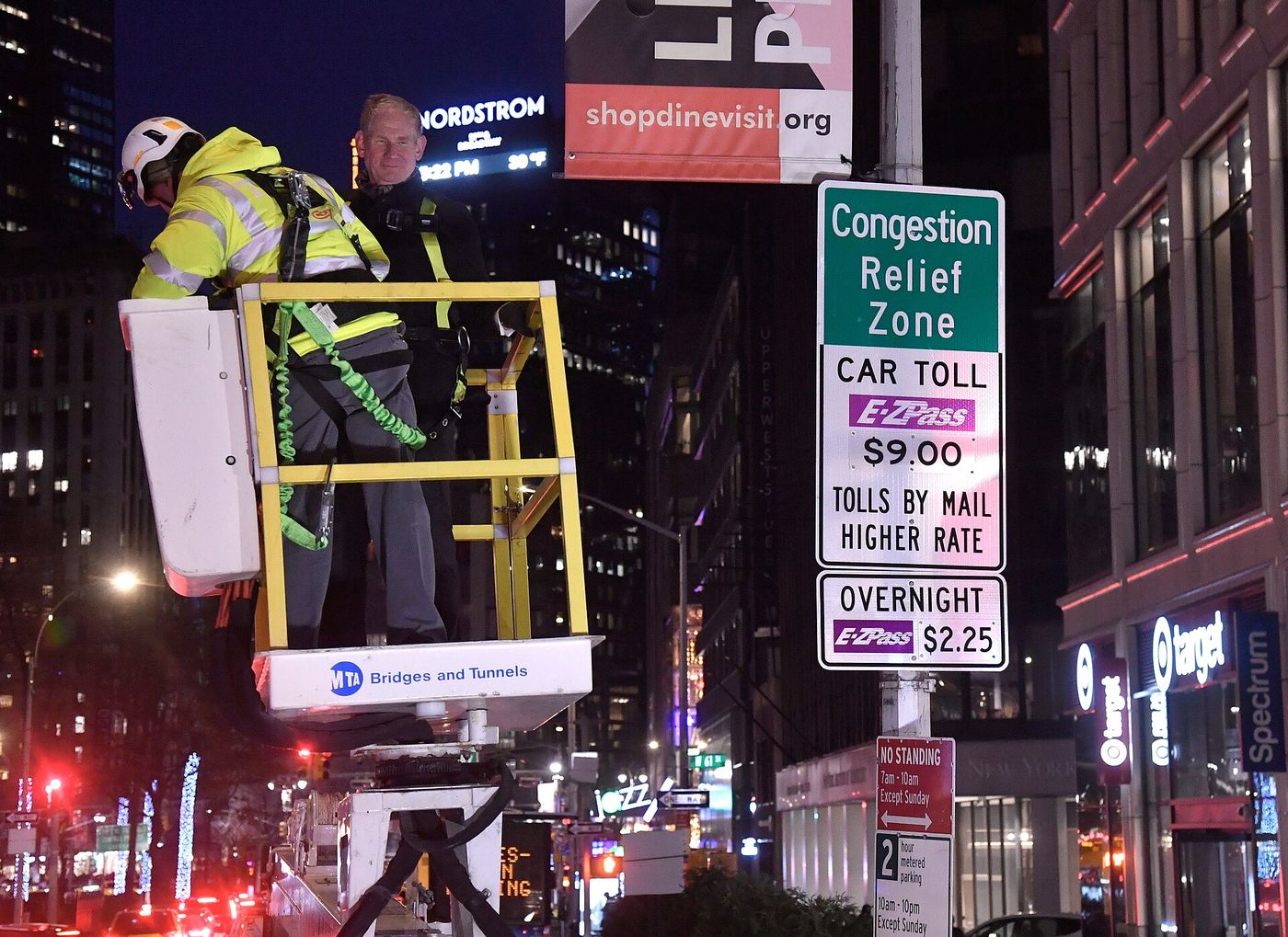
Photo: Metropolitan Transportation Authority / CC BY 2.0 via Wikimedia Commons
One year after New York City became the first U.S. city to charge drivers to enter its busiest district, the air inside the zone is measurably cleaner, according to a study from researchers at Columbia University's Lamont-Doherty Earth Observatory.
The paper, published in *Environmental Science & Technology Letters* and led by Polina Goldberg, looked at the city's Central Business District Tolling Program, which began on January 5, 2025 and charges most vehicles entering Manhattan south of 60th Street.
What they found
The team compared air monitors inside and outside the zone, adjusting for weather, seasons and regional trends, and compared 2025 with 2022 to 2024.
- Fine particulate pollution (PM2.5) inside the zone was about 1.3 to 1.4 micrograms per cubic meter lower than expected, roughly 13%
- Vehicle entries through the two tunnels the team tracked fell by about 11%
- Rush-hour pollution spikes were less pronounced
"For the most part, the program appears to be working," said co-author Daniel Westervelt, though he called the particulate reduction "modest."
Honest caveats
The study did not measure health outcomes, and it covers only one year, so the authors say longer-term analysis is needed to see whether the gains last. Two monitors just outside the zone showed slightly higher PM2.5, but the increase was not statistically significant, and the researchers said it would be premature to blame the policy. Satellite data showed nitrogen dioxide falling across the metro area, but not by enough to credit congestion pricing.
Why it matters
Fine particles are a well-known pollutant in cities, and traffic is a major source. The result gives other cities weighing similar programs a first year of real-world data from the United States.